Liquidation is not junk removal
A junk removal company sends everything to the same destination: a truck, then a transfer station. A liquidation partner sorts first. Desks with resale value, working servers, matched sets of chairs and pallet racking are separated from items that are genuinely finished, and each group follows the route that returns the most value or the least waste.
That distinction changes both the financial outcome and the paperwork. Resale-ready assets generate credits against your invoice. Items that can be donated find a second life. Material that cannot be reused is recycled by certified partners, and the result is documented. A cleared space with a disposition summary is a better outcome than an empty space and an unknown destination.
Westmark runs liquidation as a managed project with a single point of contact, from the first walkthrough through to the final handover.
What we liquidate
Most commercial clearances involve several asset families at once. Combining them under one project avoids coordinating separate vendors with competing schedules.
- Office desks, chairs, modular workstations, boardroom tables, filing and storage
- Computers, monitors, servers and networking equipment, with secure data handling
- Retail racks, displays, lighting and signage
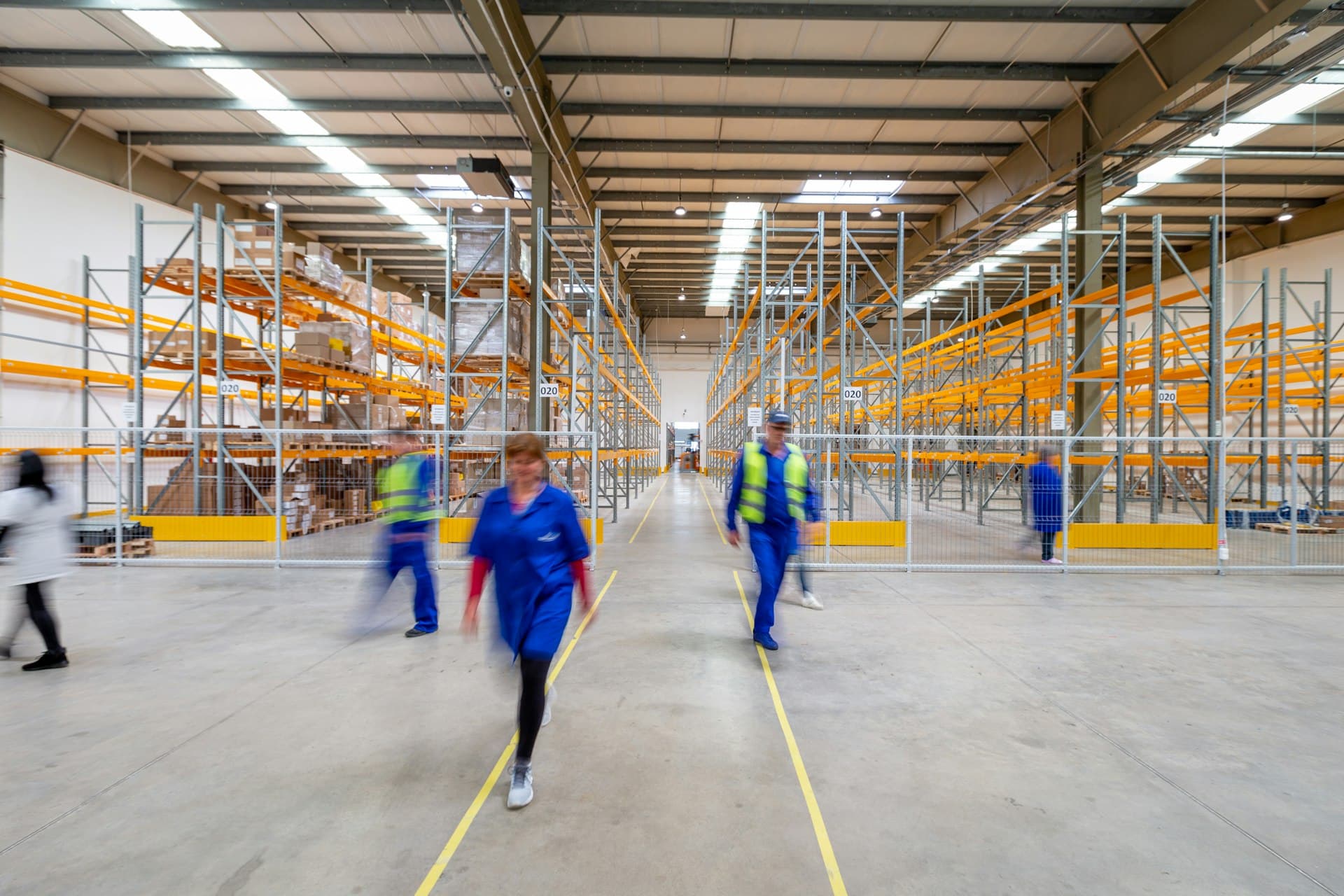
- Warehouse racking, shelving, mezzanines and material-handling equipment
- Bulk inventory, supplies and surplus stock
- Industrial and light production equipment
How value is assessed
Resale value depends on condition, brand and model, whether items form a matched set, current market demand and how easily they can be removed and sold. A run of forty ergonomic task chairs from a recognized manufacturer in good condition is a different proposition from forty mixed chairs with worn upholstery. Contemporary modular workstations sell better than discontinued systems. Heavy or integrated items whose removal costs more than the resale price may be worth less than zero until the removal is factored in.
Westmark inspects the assets and confirms credits after inspection. Credits are applied against your invoice, which means the cost of removal is reduced by what the assets earn. The itemized quote shows labour, trucking and the disposition method for each category, so you see how the numbers reach the net result rather than receiving a single unexplained figure.
Your options for each asset
Every item ends up in one of four places, and good planning is largely about choosing the best one for each group.
- Resale: appraised, sold through our buyer network and credited against your invoice
- Donation: usable items that do not justify resale effort, coordinated with local organizations
- Redeployment: items moved to another of your sites rather than removed
- Recycling: material that cannot be reused is routed to certified recycling partners, with diversion tracked
Typical scenarios
Liquidation projects tend to follow recognizable patterns. Lease-end exits come with a hard date and a landlord who inspects the space. Downsizing leaves a portion of a floor or a whole site surplus. Mergers create duplicate equipment across locations. Warehouse closures involve racking, stock and equipment on a shared timeline. Relocations need assets removed from the old site and, where required, installed at the new one. Government and institutional clients add procurement rules and approvals that shape how assets can be sold.
Each scenario has a different critical path. For a lease exit, it is the handover date. For a warehouse, it is the sequence in which buyers collect equipment. For a relocation, it is the cutover from old premises to new. We ask about the constraint that matters most early, because it determines how the work is scheduled.
Planning around buildings and deadlines
Access is where liquidation projects succeed or slip. Freight elevators must be booked, loading docks scheduled, building security informed and floors protected. Downtown towers often restrict moves to evenings or weekends. Industrial sites have their own rules for forklifts, dock capacity and safety inductions. We coordinate with property management, work after hours when needed and protect finishes so you are not billed for damage afterward.
At the end of the project we provide a disposition summary and broom-clean confirmation, which is typically what a landlord’s walkthrough needs. If the space must be returned to a defined condition, say so at the outset so the scope reflects it.
How a project runs
- 1
Initial consultation
Send your inventory or request a site visit. We evaluate the assets and outline your options.
- 2
Asset review
We assess what can be resold, donated or recycled.
- 3
Custom planning
A step-by-step plan aligned with your timeline, building access and landlord requirements.
- 4
Execution and removal
Insured crews disassemble, remove and sort every asset on schedule.
- 5
Final confirmation
A disposition summary and broom-clean confirmation once the space is cleared.
Service areas
We serve businesses across Ontario, New Brunswick and Nova Scotia. Select your city for local access notes and what to prepare.
Ontario: Toronto, Mississauga, Oakville, Brampton, Vaughan, Markham, Windsor
Atlantic Canada: Moncton, Fredericton, Halifax
Frequently asked questions
What factors determine the cost of liquidation and decommissioning services?
Cost depends on asset volume and type, site access such as elevators, stairs or a loading dock, and what the project includes, such as data destruction alongside furniture. Tight lease timelines and specialty items like server racks or safes can add labour. We confirm scope after a walkthrough and provide an itemized estimate.
Do you provide a written estimate before starting?
Yes. Every project receives an itemized quote after the walkthrough, broken down by labour, trucking and disposition method per asset category, before any work is scheduled.
How do you determine the value of our used assets?
Condition, brand and model, whether pieces are part of a matched set and current demand. Credits are confirmed after inspection and applied against your invoice. Resale-ready items are routed through our buyer network and the rest is prioritized for donation or certified recycling.
What are the benefits of using a liquidation partner instead of junk removal?
Maximized asset value, documented compliance and minimized environmental impact. A liquidation partner sorts resale candidates from recycling candidates on site instead of sending everything to the same destination.
Can you work around our building’s rules?
Yes. We coordinate freight elevators, dock bookings and security, and work evenings and weekends across our service areas when required.
Can you help with the logistics of moving to a new office?
Yes. We handle removal, transportation and installation at the new site per plan, coordinating dock and elevator bookings and protecting finishes.
What do I receive at the end of the project?
A disposition summary showing what was resold, donated and recycled, plus confirmation that the space has been left broom clean. Certificates are available for any IT equipment that was wiped or destroyed.