A warehouse is several projects at once
A warehouse closure looks like one job from the outside, but it consists of at least four. There is the stock, which needs a buyer or a destination. There is the racking and shelving, which is installed and must be dismantled. There is equipment such as forklifts, conveyors, dock gear and workbenches, each with its own market. And there is the building itself, which must be handed back in the condition the lease requires.
These streams depend on each other. Racking cannot come down until the stock is gone. Equipment cannot be collected until the buyer’s window fits the dock schedule. The floor cannot be repaired until everything is removed. The value of planning lies in sequencing them so no stream blocks another.
Pallet racking: what makes it valuable
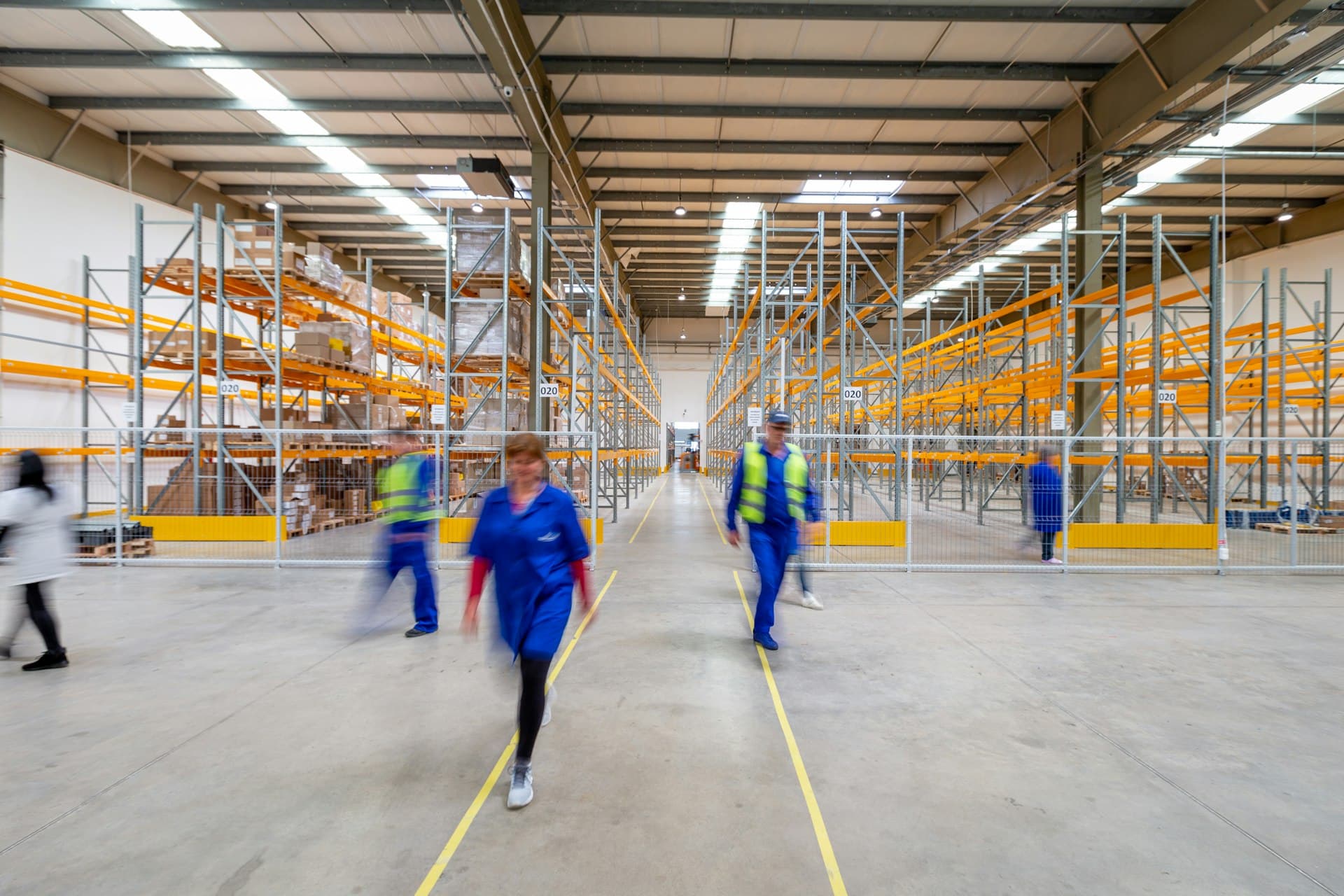
Pallet racking is often the largest recoverable asset in a warehouse. Its value depends on the system type, such as selective, drive-in or cantilever, along with the manufacturer, the condition of uprights and beams, the presence of decking and safety accessories, and whether the components are standard enough for another operator to reuse. Common selective racking from recognized makes is easier to resell than a proprietary or heavily modified system.
Dismantling racking is skilled work. Uprights are anchored to the floor, beams are load-rated and components must be removed in a safe order. Racking that has been damaged by forklift impact may be unsafe to reuse and is better sold as scrap metal. We assess condition and report what is likely to resell and what is headed for recycling, so the quote reflects reality.
- System type and manufacturer, with beam lengths and upright heights
- Condition: forklift damage, bent beams, missing safety clips and pins
- Accessories: decking, row spacers, column protectors and pallet supports
- Anchoring: how uprights are fixed and what floor repair will be needed
Equipment, mezzanines and fixtures
Beyond racking, a warehouse typically holds material-handling equipment, packing stations, workbenches, shelving, lockers and office space. Forklifts and pallet jacks may be owned or leased, and leased units must go back to the lessor. Conveyors, sortation lines and dock equipment are usually installed and need professional removal. Mezzanine platforms are structural and often need engineering input before dismantling.
Industrial equipment has a smaller market than furniture, but buyers exist when assets are properly described and photographed. Documentation such as model numbers, service records and capacity ratings has a direct effect on price. Gather what you have before the walkthrough.
Sequencing the clearance
A workable sequence usually runs: stock out, small equipment and fixtures out, racking dismantled and removed, large equipment collected, then final clean and inspection. Buyers collect on agreed days, our crews work between collections and the dock schedule governs everything.
Mistakes in the order are costly. A buyer arriving to collect a conveyor that is still blocked by racking wastes a trip. A crew dismantling racking over live stock puts people at risk. We build a project plan that shows who is on site on which day, what has to be finished before the next stage starts and what the landlord inspection requires.
Safety and access
Warehouse work involves heavy items, elevated components and powered equipment. Our crews are insured and follow site safety rules, and we ask for your induction requirements early. Share dock capacity, working-hour restrictions, forklift availability, building security and any hazards such as damaged flooring or restricted areas.
In multi-tenant industrial parks, shared loading areas can limit how many trucks fit at once. In Brampton and Vaughan, where buildings often share dock infrastructure, we plan loads around the booking windows so crews and buyer trucks are not queued unproductively.
Returning the building
Leases usually specify the condition in which a space must be returned. For a warehouse, that can include removal of all racking and anchor hardware, patching of floor anchor holes, removal of signage, clearing of office areas and general cleaning. Read the relevant clauses before the project is scoped and share them with us, so the scope includes everything the landlord will inspect.
At the end of the project, you receive a disposition summary and broom-clean confirmation. If your landlord requires documentation of waste handling or recycling, the summary shows what was resold, donated and recycled and the overall diversion result.
Where we work
We run warehouse projects across the GTA, including Brampton, Vaughan and Mississauga, in Windsor, and in Atlantic Canada from Moncton, which serves as a hub for New Brunswick distribution operations, as well as Halifax and Fredericton. Multi-site closures can be coordinated as a single program with staged pickups.
Send an approximate asset list, photos if you have them, the site address and the date the building must be vacant. We will respond within one business day.
How a project runs
- 1
Walk the site
We inspect racking, equipment, stock and the building access, and review the lease handover terms.
- 2
Value and plan
Assets are appraised and a sequenced plan is built around buyer and dock windows.
- 3
Clear stock and equipment
Stock and equipment are collected or removed in the agreed order.
- 4
Dismantle racking
Racking and fixtures are taken down safely and removed.
- 5
Hand over
A final clean, disposition summary and broom-clean confirmation.
Service areas
We serve businesses across Ontario, New Brunswick and Nova Scotia. Select your city for local access notes and what to prepare.
Ontario: Toronto, Mississauga, Oakville, Brampton, Vaughan, Markham, Windsor
Atlantic Canada: Moncton, Fredericton, Halifax
Frequently asked questions
Can you remove installed pallet racking?
Yes. We dismantle racking, shelving and mezzanine systems, assess what can be resold and recycle what cannot. Share system type, manufacturer and condition for a more accurate quote.
Do I get paid for racking and equipment?
Resale value is credited against your invoice after inspection. The itemized quote shows where credits are expected and where removal costs apply.
Can you handle both stock and fixtures in one project?
Yes. Warehouse liquidation combines surplus stock, racking, equipment and office clearance under one plan and one point of contact.
What about floor repair and landlord requirements?
Share the lease handover terms during scoping so anchor-hole patching, cleaning or other restoration work is included in the quote if required.
Do you work evenings and weekends?
Yes. Evening and weekend work is available across our service areas when dock hours or building rules require it.
What happens to material that cannot be resold?
It is routed to certified recycling partners, and diversion is tracked so you can include the figure in ESG reporting.
Do you serve warehouses outside Toronto?
Yes. We serve Brampton, Vaughan, Windsor, Moncton, Fredericton, Halifax and other locations across Ontario, New Brunswick and Nova Scotia.